Australia has more than 10,000 beaches, and most days you can enjoy them safely. The surf here is powerful, though, and coastal drowning deaths reached a record high in 2024/25. Here is what Australia's surf lifesavers and safety officials want you to know before you get wet.
Is it safe to swim in Australia?
Yes, for most people on most days, provided you choose a patrolled beach and respect the conditions. Australia's beaches are wide, golden and inviting, but most face the open ocean, and rips, waves and tides can change quickly, sometimes within one afternoon.
Surf Life Saving Australia's National Coastal Safety Report 2025 counted 154 coastal drowning deaths in 2024/25, the highest on record. More than half of those who died were 55 or older, 87 percent were male, and the risk was 3.3 times higher on public holidays and long weekends.
The common factors are unfamiliar conditions, swimming away from the flags or outside patrol hours, overestimating fitness after a long flight, and swimming alone. Every one of those is something you can control.
Why should you swim between the flags?
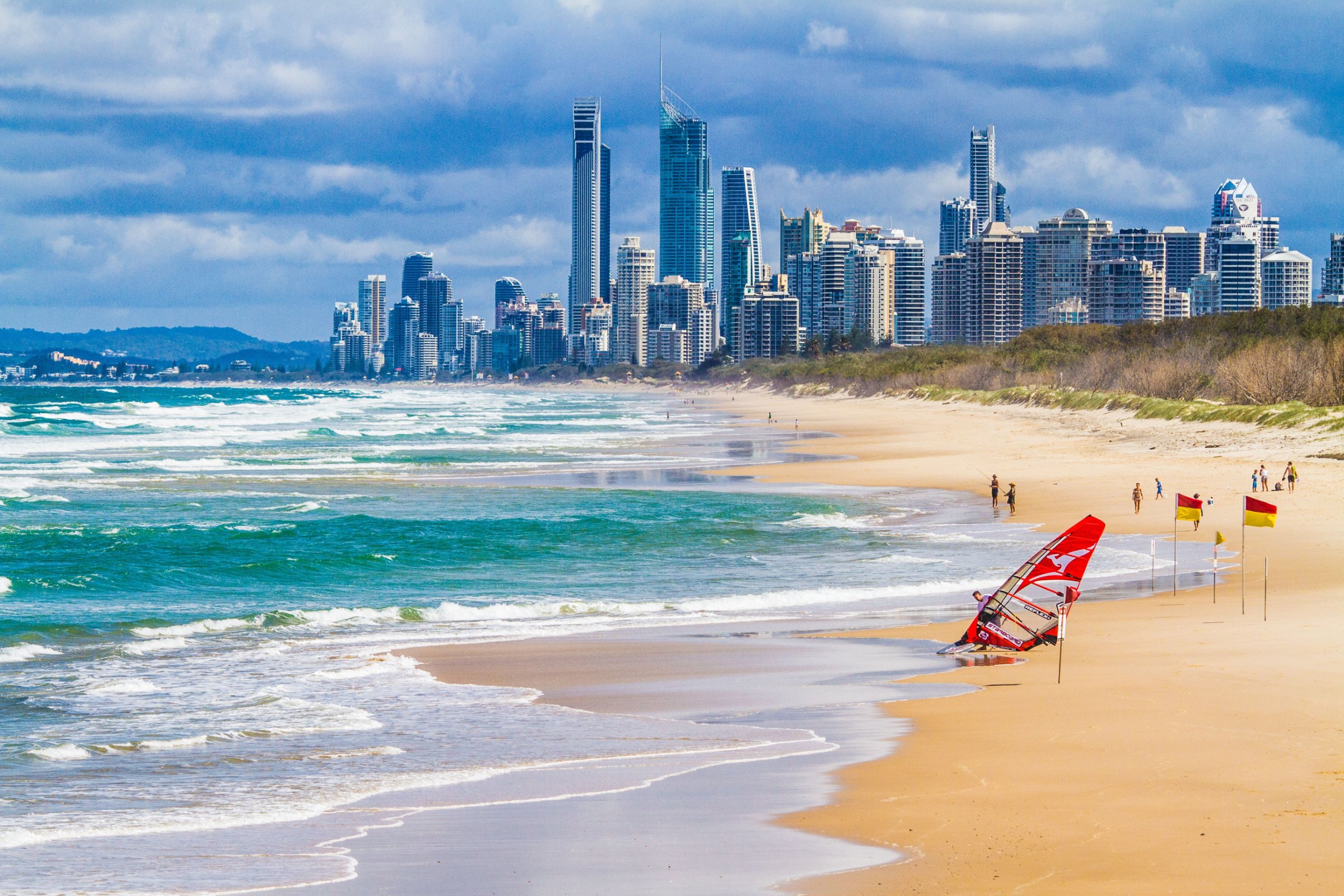
The single most effective safety step is to swim between the red and yellow flags. They mark the stretch that surf lifesavers or lifeguards judge safest that day, and they watch it for as long as the flags stay up.
- Talk to the lifesavers first. Ask about rips, surf and anything unusual that day, even if no sign is posted.
- Swim in the middle of the flags, not at the edges, where rips often run.
- No flags, no swim. When the flags come down at the end of a patrol, nobody is watching the water any more, even if people are still swimming.
Patrolled beaches exist in every state and territory, from Bondi in New South Wales to the busy beaches of Queensland, Tasmania and the Northern Territory.
What do Australian beach flags and signs mean?
Lifesavers put up and move flags and signs as conditions change. If a flag is up, it applies right now.
| Flag or sign | What it means |
|---|---|
| Red and yellow flags | The patrolled area, judged the safest place to swim. Stay between them. |
| Red flag | The beach is closed. Do not enter the water. |
| Yellow flag | Potential hazards in the water. Read the warning sign beside it. |
| Red and white quartered flag | Emergency evacuation. Leave the water immediately. |
| Blue flag | An area reserved for surfing, not swimming. |
| Yellow and black diamond sign | A hazard at this beach, such as rips or rocks. |
| Shark alarm or siren | A shark has been seen. Leave the water calmly. |
Shore dump deserves special respect. Waves that break straight onto a steep beach can drive a swimmer or bodyboarder headfirst into the sand. Treat any neck pain afterwards as a possible spinal injury.
The same caution applies on rock platforms, where rock fishers are regularly washed in. Never turn your back on the ocean on a ledge or rock shelf; a bigger set can arrive without warning, and if someone is swept in, call 000 instead of jumping in.
When are Australia's beaches most dangerous?
Risk rises at predictable times and places, according to Surf Life Saving Australia's national data:
- Outside the flags and patrol hours: every coastal drowning death in 2024/25 happened outside the flags, outside patrol times or at an unpatrolled spot. Even on Sydney's Northern Beaches, volunteers patrol on weekends and public holidays, with paid lifeguards covering many beaches on weekdays.
- Public holidays and long weekends: the drowning risk was 3.3 times higher, as crowds spread to unfamiliar beaches.
- Remote beaches: many of the most beautiful are unpatrolled and far from help.
- Big swell and strong wind: open coasts and rock platforms turn dangerous fast.
Conditions are local. On a big-surf day at an exposed beach, a sheltered bay or ocean pool may be a short drive away.
How do you escape a rip current?
A rip is a strong current running out to sea. It will not pull you under; it pulls you away from shore. People get into trouble when they exhaust themselves swimming straight against it.
- Stay calm and float to save energy. A rip may carry you back towards a sandbank.
- Do not fight the current. Swim parallel to the beach or towards breaking waves, then head back in.
- Raise one arm and call out to attract the lifesavers or lifeguards.
Before you go in, look for darker, deeper water with fewer breaking waves, or sandy water and debris moving out to sea. In Australia, rips cause at least 37 percent of beach drowning deaths, and they can form within seconds, often in the calm-looking gap between waves.
How do you snorkel safely on the Great Barrier Reef?
WorkSafe Queensland says people aged 45 and over and those with heart conditions are most at risk on snorkelling tours.
- Know your health limits. Heart conditions, high blood pressure, excess weight and limited swimming ability are listed as risk factors, and snorkelling strains the body more than people expect. Mention any condition to the crew before you get in.
- Never snorkel alone; stay with a buddy or a guided group close to the boat.
- Check your gear on the boat: a leak-free mask, snug fins and a clear tube.
- Use flotation. A snorkel vest or noodle lets you rest without effort.
- Head back early if you feel tired, anxious or short of breath.
On reef tours, WorkSafe Queensland encourages operators to ask at-risk snorkellers for a written medical declaration, give them a flotation device and a buddy, and mark them with a visible item such as a red snorkel so lookouts can watch them closely. The regulator stresses that this screening is not meant to stop anyone taking part. If the crew offers these, accept them. In the tropical north, also wear a full-length stinger suit: it protects against jellyfish stings and sunburn at the same time, and lets you stay in the water longer.
Choosing the right site for the day matters as much as technique. Our guides show which sites suit beginners, which need a boat and which are best in calm weather; see the full guides to Sydney and Tasmania snorkelling and diving.
When is box jellyfish season in Australia?
Box jellyfish follow the heat. Surf Life Saving Queensland says marine stinger season typically runs from November to May in tropical Queensland, though stingers can be present all year. Box jellyfish stings cause severe pain and can stop the heart, and the tiny Irukandji can trigger symptoms 5 to 40 minutes later.
In the tropics, swim only at patrolled beaches, inside stinger nets where they are installed, wear a stinger suit, and ask the lifesavers.
First aid is vinegar. For a box jellyfish or Irukandji sting, call 000, start CPR if needed, and pour vinegar on the sting for at least 30 seconds. Seek medical help for any sting that leaves someone unwell.
Should you worry about sharks in Australia?
Shark bites make headlines, but drowning is by far the greater danger. Taronga's shark database logged 22 unprovoked bites in 2025. You can lower that small risk further with NSW's SharkSmart guidance:
- Swim at patrolled beaches, between the flags, with others.
- Avoid murky water, river and harbour mouths, and areas with bait fish.
- Stay out at dawn, dusk and night, and if you have a bleeding cut.
- Remember that dolphins nearby do not mean sharks are absent, and keep well away from shark nets.
- If a shark alarm sounds or you see a shark, leave the water calmly and tell a lifesaver.
Is it safe to swim in rivers, creeks and waterholes?
In the north, the first risk is crocodiles. In Queensland, saltwater crocodiles live from around Gladstone north to the Torres Strait and the Gulf of Carpentaria, and they also range across the Top End. They can be in any river, estuary or the sea there, and stay underwater for hours. Never swim where crocodiles may live.
The second is water you cannot read. Creeks and waterholes can hide logs, sudden drops and strong flows, and rain upstream can raise them fast. The Northern Territory's Be Crocwise program advises standing at least 5 metres back from the water when fishing and camping at least 50 metres away; swim only where rangers and signs say it is safe, and never ignore a warning sign.
How do you check ocean conditions before you go?
- Beachsafe, Surf Life Saving Australia's website and app, shows patrolled beaches, patrol times, hazards and weather.
- The Bureau of Meteorology issues marine forecasts and hazardous surf warnings for each coast.
- The lifesaver on duty remains the best real-time source.
Plan for the sun as well: Australia's UV is fierce even on cloudy days, so wear SPF 50 sunscreen, a rash vest and a hat, and take shade breaks. Dehydration and fatigue make every ocean hazard harder to handle.
For any emergency, call 000, and if you see someone in the water with an arm raised, alert the lifesavers rather than swimming out.
Facts checked October 2026. Drowning figures come from Surf Life Saving Australia's National Coastal Safety Report 2025 (2024/25 data); conditions change daily, so always check with lifesavers and official forecasts before entering the water.
- Surf Life Saving Australia: National Coastal Safety Report 2025 (release)
- Surf Life Saving Australia: Rip currents
- Queensland Government: Beach safety, flags and signs
- Surf Life Saving Queensland: Marine stingers
- WorkSafe Queensland: Snorkelling incidents
- NSW SharkSmart: Staying safe
- NT Government: Be Crocwise
- Tourism Australia: Water safety in Australia